Event 1
Geri’s death
[Geri’s death](entity:event-recall-event-geri-c9c9ea0b0109) was a murder disguised as an accidental fire, and its delayed disclosure overturns the account [Scott Duncan](entity:character-recall-character-scott-duncan-487250ab727b) had lived with for fifteen years. [Monte Scanlon](entity:character-recall-character-monte-scanlon-121477974e66) says he was sent to kill someone called “Jerry,” a name he understood to refer to a man; the target was [Geri](entity:character-recall-character-c40c827ee3c5). The confession gives Scott the truth about his sister’s death while leaving the person who ordered it, and the reason for it, unexplained.
## The killing and its concealed cause
Scanlon describes receiving a telephone call from an intermediary fifteen years earlier. The caller gave him an address and the exact time that “Jerry” would be home. Scanlon’s account makes the name itself central to the error: he explains that, hearing “Billy,” he would expect a man, and that he similarly took “Jerry” to be a male name. He had not understood that the person at the address was Geri. The mistake identifies how the intended victim was misrecognized, but does not identify who arranged the killing or why.
The fire had not been accepted as a murder. Scott tells Scanlon that Geri’s death was ruled an accident; Scanlon answers that many arsons receive that ruling when the person setting the fire knows what he is doing. His response presents the official conclusion not as evidence that the death was accidental but as the result the killing was designed to produce. The disclosure establishes that Scanlon intentionally used arson and expected it to conceal the crime. It does not provide further details about how he set the fire, what evidence investigators examined, or how the intermediary knew Geri’s address and schedule.
## Scott’s recognition of what the name concealed
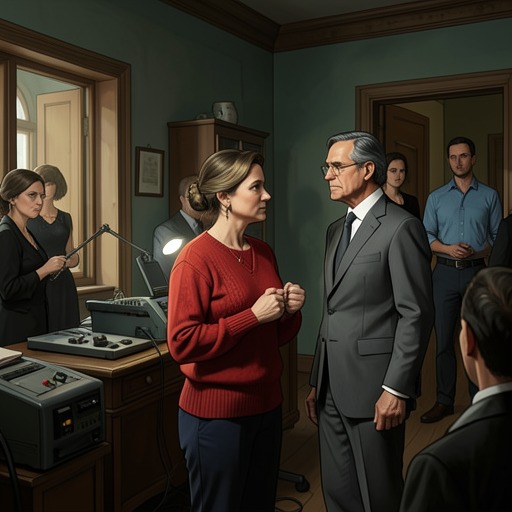
Scott’s reaction changes as Scanlon connects the old phone call to his sister. When Scanlon asks whether they had spoken about Scott’s sister, names Geri, and explains his assumption about “Jerry,” Scott goes still and then shakes his head. At first he rejects the claim. Yet the disclosure has already unsettled the meaning of the supposed accident: Scanlon’s account places a deliberate killing behind the explanation Scott had known.
The force of that revelation lies not in a new description of the fire but in the person Scott remembers. As he looks at Scanlon, memories come back in intimate, ordinary particulars: Geri’s contagious smile, unruly hair, braces, and the way she stuck out her tongue at family gatherings. He recalls her first boyfriend, Brad, her lack of a date for the junior prom, her campaign speech for student council treasurer, her first rock band, and her college acceptance letter. These details restore a life to the name that Scanlon had treated as a mistaken instruction. Scott says she was only twenty-one. Her age makes the killing’s human consequence explicit, even as Scanlon offers no explanation for the act.
## Confession without an explanation
Scott asks why Geri was killed, but Scanlon declines to supply a motive. He describes himself as a hired hand who does not get into the reasons. The answer marks a boundary in what the confession can establish: Scanlon admits his part in the killing and explains the name-based mistake, but his account does not reveal who employed him or what purpose the murder served. Scott’s question therefore remains unanswered rather than resolved by the admission.
Scott then asks a different question: why tell him now? Scanlon studies his reflection in a mirror before replying that perhaps Scott had been right earlier, and that after everything was said and done he needed the illusion of being human. The confession consequently does more than correct the record of Geri’s death. It also exposes Scanlon’s need to frame his disclosure in terms of his own humanity, while Scott is left with the knowledge of what happened to his sister and no account of why she was chosen.
## Significance and limits of the revelation
The event turns on two meanings of a name. The intermediary’s “Jerry” becomes, in Scanlon’s hearing, a male target; the person killed is Geri, Scott’s sister. That confusion explains how Scanlon says he proceeded, but it does not make the outcome accidental: he describes receiving instructions for a killing and using arson to disguise it. The name error is the mechanism of misidentification, not an excuse that changes the nature of the act.
The timing also shapes the revelation. For fifteen years, Scott has understood Geri’s death through the ruling that it was an accident. The truth arrives not through a newly described investigation but through the killer’s direct admission, and it comes with a limit: the method and the mistaken identity are disclosed, while the motive remains outside Scanlon’s account. The scene thus gives Scott a decisive truth about how Geri died without giving him a complete explanation. His memories make the cost of that partial knowledge concrete: behind the wrongly heard name stands a twenty-one-year-old whose family life, adolescence, and future Scott can still recall.
Event 2
Jack Lawson’s kidnapping
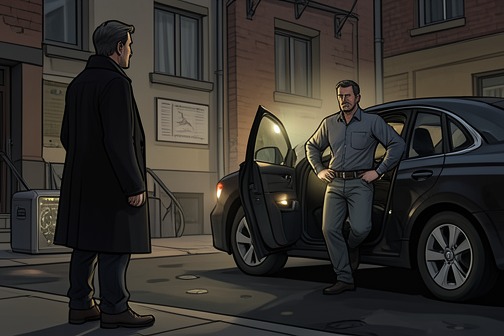
[Jack Lawson’s kidnapping](entity:event-recall-event-jack-lawson-519829a1d0b5) turns a surveillance assignment into a deadly intervention: private investigator [Rocky Conwell](entity:character-recall-character-rocky-conwell-c0c8f9cfdf5b) watches [Eric Wu](entity:character-recall-character-eric-wu-b89e49cec260) seize [Jack](entity:character-recall-character-jack-b5a26722c3ea) near [Woodbury Commons](entity:location-recall-location-woodbury-commons-02dadf16c21c), then dies trying to stop him. The abduction does not end at the roadside. Wu relocates Jack, hides the evidence, and uses the threat to Jack’s children to make him mislead [Grace Lawson](entity:character-recall-character-grace-lawson-a1a63aae00db) about why he has disappeared.
## Causes and Background
Rocky is following Jack on a late-night drive, doing the job he was hired to do. At ten P.M., Jack crosses the New York border and takes the thruway north. Rocky considers calling in what he sees but decides there is nothing reportable yet: Jack is simply taking a ride, and Rocky is following him. The assignment’s governing limit is explicit: Rocky has been told to observe and not engage. That instruction matters because the danger arrives before he has a chance to summon help.
Half an hour later, Jack pulls off near Woodbury Commons, a large outdoor mall closed for the night. He parks on a quiet stretch of road, and Rocky hangs back, reasoning that getting closer would expose him. From his car, Rocky switches off the headlights and watches through binoculars. Jack leaves his minivan and heads toward a wooded area, where another car is parked nearby. Rocky initially interprets the scene as a possible romantic meeting, a mistaken reading that lasts only until he notices the other man.
## The Abduction and Rocky’s Intervention
The stranger is short, square-built, and dressed in fatigues. He stands beside Jack without moving, then places a hand on Jack’s shoulder with a touch Rocky reads, briefly, as almost tender. The appearance of gentleness conceals the action’s violence: Jack drops to the ground as if his strings have been cut. The stranger lifts him by the neck and carries him toward his car with one hand, treating an unconscious person as though he were an object to be loaded away.
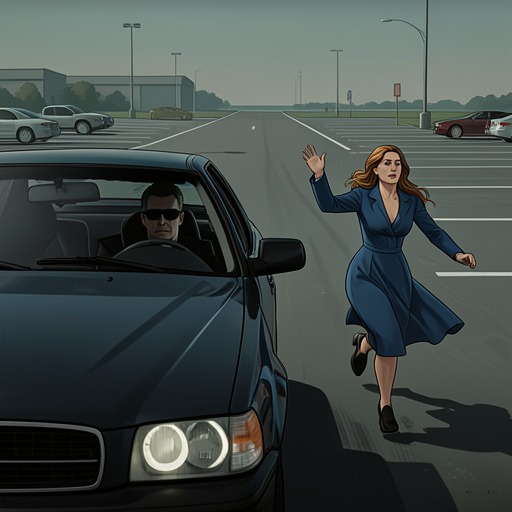
Rocky understands that Jack is being taken, but the means of reporting it fail him. He remembers that his cell phone is back in his car. He does manage to register the kidnapper’s vehicle as a Honda Accord with [New Jersey](entity:location-recall-location-39f2e21cff7b) plates and watches the man open the trunk and dump Jack inside. Rocky’s orders say not to engage, and he has no gun; nevertheless, he runs toward the car and calls for the man to stop. His decision is the episode’s sharp reversal: the watcher crosses into the danger he was instructed only to observe.
The kidnapper, later identified as Eric Wu, does not flee. When Rocky demands that he let Jack out of the trunk, Wu nods and glances toward it. Rocky follows his glance, and Wu strikes. The first blow lands in Rocky’s kidney with force he has never experienced, despite his professional fighting experience. Wu follows with a hard jab to the liver. Rocky cannot make a scream come out and falls; Wu kneels beside him. Rocky’s last sight is Wu’s calm face as Wu places his hands beneath Rocky’s rib cage. His final thought is of Lorraine, his wife, before he dies.
## Concealment and Jack’s Continued Captivity
The kidnapping creates an immediate logistical problem for Wu: Rocky’s body and car must also be dealt with. After noticing a woman in a window, Wu recognizes the possibility of interference and sets about removing evidence. He first places Rocky in the trunk of his Toyota Celica, then transfers Jack from the Honda Accord to the back of [Jack Lawson’s Ford Windstar](entity:object-recall-object-jack-lawson-ford-winds-ba4c840ecc8e). He changes license plates, discards the E-ZPass, and drives the Ford Windstar back to [Ho-Ho-Kus](entity:location-recall-location-ho-ho-kus-84646da8cdde), parking it in [Freddy Sykes](entity:character-recall-character-freddy-sykes-b9d826f8c3fe)’s garage.
Wu takes Rocky’s car to the [Route 17 Park-n-Ride](entity:location-recall-location-route-17-park-n-ride-4546211fcacd) and leaves it in a remote spot by the fence, where a vehicle might remain unnoticed for days or weeks. The location is only three miles from Freddy’s house. Wu walks back, catches a bus to Central Valley early the next morning, and retrieves Freddy’s Honda Accord. On the return trip, he detours past the Lawson residence and sees a patrol car in the driveway. The detail confirms that the disappearance has already drawn police attention, while Wu’s concealment efforts have placed Jack and Rocky’s fate inside a wider chain of searches and potential discoveries.
## Coercion and Consequences
Back at Freddy’s residence, Wu watches daytime television before turning to the police problem he anticipates. He does not need to touch Jack to secure his cooperation. Instead, he tells Jack that he knows Jack has two children. The threat is effective: Jack makes a call to [Grace](entity:character-recall-character-grace-f21f0fdf609d)’s cell phone and tells her that he needs space. The message offers a plausible explanation for his absence while masking that he is being held against his will.
The call extends the kidnapping beyond physical captivity. Jack is forced to participate in the deception that separates him from Grace, and his family becomes the leverage through which Wu controls what she hears. For Rocky, the same sequence has the opposite outcome: a surveillance job becomes a confrontation, and his attempt to rescue Jack costs him his life. The event therefore establishes both the practical danger of Wu’s abduction and its governing method—violence against anyone who interferes, followed by calculated concealment and coercion.
Event 3
Boston concert stampede
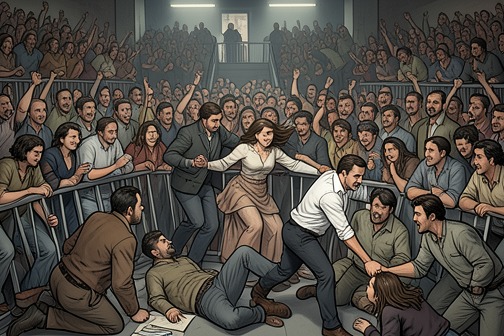
The [Boston concert stampede](entity:event-recall-event-3e574e10b201), often called the [Boston](entity:location-recall-location-ccccb9ca0ba9) Massacre, was a deadly disaster at a rock concert at [Boston Garden](entity:location-recall-location-boston-garden-8a6c91071b47). It killed many people, destroyed the [Jimmy X Band](entity:organization-recall-organization-jimmy-x-band-eb8603dce94b), and left survivors and bereaved families living with the event long after the immediate crisis. The incident became both a private wound and a public story: news coverage turned [Grace Lawson](entity:character-recall-character-grace-lawson-a1a63aae00db) into a national symbol of survival, while she and others struggled with the distance between that image and the grief the disaster had left behind.
## The Disaster and Its Immediate Legacy
The available account identifies the event as a stampede and notes that many people died, but does not establish the precise sequence that caused it. The distinction mattered even in later conversation: when [Daley](entity:character-recall-character-daley-df343abbb722) called it a rock-concert riot, [Stuart Perlmutter](entity:character-recall-character-stuart-perlmutter-05364f8eaf68) corrected him that it had been more a stampede. The surviving descriptions emphasize the human toll rather than reconstructing the crowd movement or assigning responsibility for the disaster.
Among those caught in its aftermath was Grace Lawson, who was pulled from the Boston Massacre injured. Television crews monitored her vital signs, and news organizations repeatedly broadcast her image alongside medical updates. She became known in the press as an innocent survivor and was given the tabloid epithet Crushed Angel. The scale of that attention rested partly on how she looked: the narrative observes that a less physically appealing survivor might not have received the same sustained coverage or public identification. Her image was made into a public emblem, not simply a record of one person's recovery.
Families of victims came to [Grace](entity:character-recall-character-grace-f21f0fdf609d)'s hospital room and searched her face for traces of their own lost children. The visits joined her survival to their bereavement: she could be seen as a living connection to those who had died, though she was not a substitute for them. Grace later remembered seeing the families through the haze of medication, as if through a shower curtain. When she encountered them again years later, their grief was still legible to her, and their embraces required no explanation.
## Survivors, Performers, and the Unfinished Aftermath
The disaster also ended the Jimmy X Band. [Jimmy X](entity:character-recall-character-jimmy-x-93737acc033e) had been its front man and songwriter, but the band broke up after the stampede and he quit. Stuart Perlmutter remembered his late wife listening to the band's song Pale Ink on a Walkman, an ordinary private memory that persisted alongside the public account of the disaster. The band's dissolution gave the event a cultural aftermath as well as a human one: its effects reached beyond those physically injured or killed and into the work and lives of those who had performed that night.
Jimmy X's memories remained fixed on the people who died. He told Grace Lawson that he had read every newspaper and magazine story and watched the news reports; he could name every child who died and still saw their faces when he closed his eyes. That recollection presents remembrance not as a completed act of mourning but as an involuntary return. In a later conversation, Grace told him that he had not fired a gun that night and was not the person to grant him absolution. Her reassurance recognized the difference between being implicated in a catastrophe and causing it, without pretending that this distinction could erase his burden.
The event's survivors did not respond uniformly. Some victims' parents and survivors took part in anniversary coverage because they considered it a way to keep the memory alive. Grace chose the opposite course. She had an active art career and did not want her injury to become a platform that appeared to capitalize on the tragedy. She regarded herself as injured, not as the event's representative, and believed public attention belonged to the dead and those they had left behind. Her refusal was not forgetfulness; it was a judgment about whose grief should occupy the foreground.
## Public Memory and the Fifteenth Anniversary
Fifteen years after the disaster, newspapers published expected retrospectives asking where survivors were now. Articles revisited bereaved families, while a photograph of [Carl Vespa](entity:character-recall-character-carl-vespa-93d298729f20) and his wife showed a couple who still looked hollowed out by what had happened. [Gordon MacKenzie](entity:character-recall-character-gordon-mackenzie-c299d7f6c5ac), a security guard credited with saving many people by forcing open locked emergency exits, had become a police captain in Brookline. Yet he rarely spoke about the rescue and said he could not remember exactly what he had done. He described opening doors and pulling people out as a reaction rather than an act of bravery. His account contrasts the public need to identify heroes with a survivor's uncertain, restrained description of his own conduct.
When Grace Lawson later entered a [Burton and Crimstein](entity:organization-recall-organization-burton-and-crims-995a7c8ef92b) press conference, she encountered several families whose loved ones had died. Their faces brought back the hospital period, which she had experienced through the haze of Halcion; the present gathering felt similarly unreal. They approached in silence and hugged her. Grace accepted their embraces and could still feel their sadness. She gave Gordon MacKenzie's widow an especially long hug. The scene shows anniversary remembrance as more than newspaper retrospectives: it also takes the form of a meeting between people whose loss has endured beyond the event's headline life.
## Art, Image, and the Persistence of the Event
Before the stampede, Grace Lawson had wanted to become an artist but felt that something elusive was missing from her work. The experience changed her artistic sensibility without changing her conscious point of view. Her paintings became darker, angrier, more vivid, and more emotionally alive. She painted only one portrait directly associated with that day: a young face full of hope, with the knowledge that the hope would soon be crushed. Yet the more complete truth, as the narrative frames it, is that the Boston Massacre shaded and colored everything she made.
This artistic change echoes the event's larger double life. Public coverage concentrated on Grace's appearance and condition, turning a survivor into a compelling image; her art carried the disaster less literally, through a changed emotional register. The difference is not between remembering and forgetting, but between a public story that can be packaged around a visible survivor and an experience that continues to shape what she sees and creates. The Boston concert stampede therefore remains present in the novel not only as a past catastrophe, but as a continuing pressure on memory, identity, performance, and the obligations survivors feel toward the dead.
Event 4
Geri Duncan’s murder
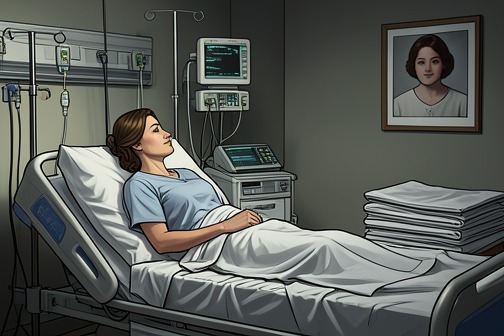
[Geri Duncan’s murder](entity:event-recall-event-geri-duncan-8094542ec5d2) is the hidden crime behind an apparent dormitory-fire accident: the death of [Scott Duncan](entity:character-recall-character-scott-duncan-487250ab727b)’s twenty-one-year-old sister was deliberately disguised, and later revelations connect it to her pregnancy and her attempt to find [Shane Alworth](entity:character-recall-character-shane-alworth-d32bb93eaa1d). The event emerges not as a witnessed scene but as an accumulating account—first a family loss, then a hired killing, and finally an accusation about who stood to benefit from [Geri](entity:character-recall-character-c40c827ee3c5)’s silence.
## The death presented as an accident
Geri died at twenty-one in a fire in her dormitory room at [Tufts University](entity:location-recall-location-tufts-university-1cedb80dfb7a). For years, Scott Duncan believed the fire had been accidental, perhaps caused by an electrical fault. That account had also reached [Grace Lawson](entity:character-recall-character-grace-lawson-a1a63aae00db) through newspaper coverage. While undergoing physical therapy, she read about [Geri’s death](entity:event-recall-event-geri-c9c9ea0b0109) and remembered the reports when Scott later identified the young woman in a photograph as his sister. [Grace](entity:character-recall-character-grace-f21f0fdf609d) had not known Geri personally; her recognition came from the news and from the face preserved in the photograph.
The interval between the fire and its reclassification is important. Scott says that he learned only three months before speaking with Grace that the death had not been an accident. The official-looking explanation had lasted long enough to become the version even Geri’s brother accepted. The murder’s concealment therefore begins with its apparent cause: the fire did not merely kill Geri, but also supplied a plausible account that delayed recognition of a crime.
## The hired killing revealed
Scott explains that the [U.S. Attorney’s Office](entity:organization-recall-organization-a6993013ce6b) had apprehended [Monte Scanlon](entity:character-recall-character-monte-scanlon-121477974e66), a hired assassin whose assignment was to make Geri’s death look accidental. This turns the old newspaper story into evidence of deliberate planning: what Grace remembered as a reported fire was, according to Scott’s new information, a killing disguised as one. The evidence establishes the role attributed to Scanlon and the intended appearance of the death, but does not describe the mechanics of the fire or the circumstances of his apprehension in detail.
The disclosure changes the meaning of the photograph as well. Scott had brought Grace into the investigation by identifying the woman in the image as his sister; her crossed-out face becomes the point from which the old case can be spoken aloud. Grace asks who the woman is and whether her name means anything to her. At first it does not. When Scott supplies Geri’s name and explains that she died in a dormitory fire, Grace’s memory of the newspaper reports joins the photograph to a specific death. The image is not itself a solution, but it reconnects a private family loss to an event Grace had encountered only as public news.
## Pregnancy and the motive Grace reconstructs
A later examination of Geri’s remains establishes that she was pregnant when she died, no more than four or five months along. Scott’s physical reaction registers the force of the discovery, while Grace remains still. The finding adds information neither the old accident account nor the first disclosure of a hired assassin had supplied: Geri’s death also ended a pregnancy, and the pregnancy helps explain why someone might have wanted her silenced.
Grace eventually presents a specific reconstruction to [Sandra Koval](entity:character-recall-character-sandra-koval-0782a975a01b). In Grace’s account, Shane had agreed to assume the identity of John Lawson and had to sever his former connections and go overseas. Geri remained behind; after she learned she was pregnant, she could not find him and went to Sandra. Grace reasons that Geri wanted to tell the truth, locate the child’s father, and begin again. She believes Shane would not have abandoned Geri if she had insisted on having the child, and that this prospect threatened Sandra’s position. These details are presented as Grace’s explanation of the motive, not as a separately witnessed account of Geri’s final decisions.
Grace then accuses Sandra of using her connections as a criminal defense attorney to find a hit man, naming Monte Scanlon as the person hired. Sandra responds that Grace cannot prove the accusation. The exchange distinguishes what the investigation has established from what Grace infers: Geri was murdered, Scanlon was hired to disguise the killing as an accident, and Geri was pregnant; Sandra’s alleged role and the precise motive are articulated by Grace in her confrontation with her. The novel makes that accusation central without presenting it as a confession from Sandra.
## The murder’s continuing consequences
Geri’s death survives in different forms: as a newspaper account Grace encountered during recovery, as a photograph Scott uses to seek answers, and as a concealed crime whose meaning changes when the pregnancy is discovered. For Scott, the shift from accident to murder revises the history of his sister’s death. For Grace, the case becomes inseparable from her search for [Jack Lawson](entity:character-recall-character-jack-lawson-ffd2637b5d2d), because her reconstruction links Geri’s pregnancy to Shane’s assumed identity and to the past [Jack](entity:character-recall-character-jack-b5a26722c3ea) had not explained to her.
The delayed disclosures give the murder its narrative force. The fire first appears settled by an accidental explanation; the assassin’s apprehension overturns that explanation, and the examination of Geri’s remains supplies a further fact that redirects the search toward motive. The past does not return as a complete account delivered at once. It has to be assembled from a photograph, remembered news coverage, Scott’s new information, and Grace’s reasoning about the people connected to Geri. The result is both a recovered crime and an unresolved personal accusation, whose consequences reach into Grace’s marriage and her effort to find her husband.
Event 5
Rocky Conwell’s murder
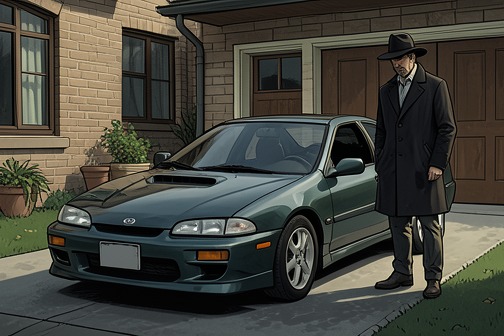
[Rocky Conwell’s murder](entity:event-recall-event-rocky-conwell-00a4122223de) transforms a private investigator’s surveillance of [Jack Lawson](entity:character-recall-character-jack-lawson-ffd2637b5d2d) into a murder investigation, with a low-sitting Toyota Celica providing the first decisive clue. The discovery confirms that Rocky is dead, but the timeline and physical evidence complicate the initial suspicion that [Jack](entity:character-recall-character-jack-b5a26722c3ea) killed him; the novel identifies [Eric Wu](entity:character-recall-character-eric-wu-b89e49cec260) as the murderer.
## Background and the Surveillance Trail
Rocky had been hired by [Indira Khariwalla](entity:character-recall-character-indira-khariwalla-09ee6cc1192b) to follow Jack Lawson. That assignment gives the police a reason for Rocky’s movements and makes the timing of his death especially significant. [Captain Stuart Perlmutter](entity:character-recall-character-captain-stuart-perl-7c1d9330222b) connects Rocky’s work to the E-ZPass record: Rocky crossed a tollbooth at 10:26 p.m. The medical examiner estimates that he probably died before midnight, placing his encounter with whoever attacked him sometime after that crossing.
The surveillance detail is more than background. It links Rocky’s last known movements to Jack without establishing that Jack caused his death. That distinction drives the investigation: the same trail that makes Jack an obvious suspect also requires the officers to test whether the apparent explanation fits the other facts.
## Discovery in the Toyota Celica
Captain Stuart Perlmutter notices that the rear of Rocky’s old Toyota Celica sits unusually low. Rust along the wheel trim and missing hubcaps give the car a worn appearance, but those details do not account for the change in its stance. The trunk area appears weighed down, and Perlmutter concludes that something heavy is inside. The evidence at this point is suggestive rather than conclusive: the weight could have had an ordinary explanation, and he considers possibilities such as Rocky moving his exercise weights.
As Perlmutter approaches the trunk, he sees Rocky’s keys. The key chain bears a Penn State football helmet associated with Rocky’s wife, [Lorraine Conwell](entity:character-recall-character-lorraine-conwell-3615053c1b49). The small personal object briefly draws attention away from the mechanics of the search toward a relationship touched by Rocky’s disappearance and death. Perlmutter then uses the keys to open the trunk. Inside is Rocky’s body, confirming that the unusual weight came from a murder victim rather than belongings being transported.
The discovery changes the officers’ task at once. Before the trunk is opened, its weight is a clue that must be interpreted; afterward, it is part of a homicide investigation. The moment answers the immediate question of what the car contains, while making the larger question—who killed Rocky and why—more urgent.
## Timeline and the Suspect Theory
Captain Stuart Perlmutter reconstructs the interval between Rocky’s tollbooth crossing at 10:26 p.m. and the medical examiner’s estimate that he died before midnight. He reasons that Rocky probably encountered foul play sometime soon after the crossing. Since Rocky had been hired to follow Jack Lawson, Perlmutter initially proposes that Jack realized he was being watched, confronted Rocky, and killed him. One of the other officers agrees that the theory makes sense on its face.
Perlmutter immediately tests that explanation against Rocky’s physical stature. Rocky was six feet five inches tall, weighed 260 pounds, and was in excellent shape. Perlmutter questions whether Jack could have killed a man of that size with his bare hands. The comparison does not, by itself, identify another killer or prove exactly what happened; it exposes a weakness in the simplest account of the evidence. Rocky’s professional connection to Jack supplies a motive for an encounter, but not sufficient proof that Jack was the murderer.
The sequence makes the investigation’s uncertainty legible to the reader. A surveillance assignment, a recorded crossing, a narrow estimated time of death, and the body in the trunk form a chain of clues. Each narrows the circumstances of Rocky’s final hours, yet the investigators must distinguish a plausible suspect from a conclusion supported by the full case.
## Murderer and Narrative Significance
The novel identifies Eric Wu as [Rocky Conwell](entity:character-recall-character-rocky-conwell-c0c8f9cfdf5b)’s killer. That resolution separates the truth of the murder from the police theory developed around Jack Lawson: Jack’s connection to Rocky explains why suspicion initially falls on him, but it does not make him responsible for Rocky’s death. The available account of the discovery and investigation foregrounds the clues and the mistaken direction of suspicion rather than detailing how Eric Wu killed Rocky.
Rocky’s death also makes surveillance itself dangerous. He begins as a paid observer following Jack; after the discovery, his own movements become the subject of reconstruction, and details that had seemed routine—the toll record, the car, the keys—acquire evidentiary weight. His murder therefore operates both as a death and as a reversal in the novel’s investigation: the person watching Jack becomes a victim whose fate exposes how little the apparent trail alone can establish.
Event 6
Attack at Freddy Sykes’s home
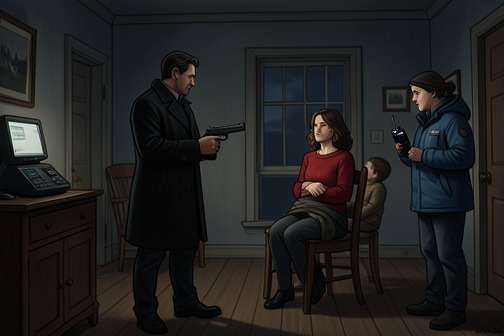
The attack at [Freddy Sykes](entity:character-recall-character-freddy-sykes-b9d826f8c3fe)’s home turns [Eric Wu](entity:character-recall-character-eric-wu-b89e49cec260)’s methodical online victim selection into an immediate threat to life. Wu chose a man isolated by circumstance and living close to [Grace Lawson](entity:character-recall-character-grace-lawson-a1a63aae00db) and [Jack Lawson](entity:character-recall-character-jack-lawson-ffd2637b5d2d); when a neighbor’s intervention brought police to the house, he had to choose between abandoning his plan and confronting an officer.
## Selection and Setup
Wu used online personals not to find a partner but to identify people he could approach under invented identities. He maintained seven accounts with different male and female personas, spanning several kinds of dating sites, and kept up flirtations with dozens of people at once. His approach was patient: he gathered personal details over time and used them to judge whether a potential target could be reached safely.
His criteria made social isolation a practical vulnerability. A target with children, nearby relatives, roommates, a demanding job, or many close friends was less suitable because other people could notice an absence or intervene. Wu also needed someone geographically close to the Lawson home. Freddy Sykes met both conditions: he was forty-eight, had no siblings, and had lost both parents. He had cared for his mother and, according to what he shared online, had not made time for a relationship before her death. He inherited her house in [Ho-Ho-Kus](entity:location-recall-location-ho-ho-kus-84646da8cdde) two years earlier, leaving him alone about three miles from Grace Lawson and Jack Lawson.
For three weeks, Freddy had been corresponding with Al Singer, a fictional fifty-six-year-old retired executive whose online persona was presented as a widower interested in travel, dining, and sports. Wu used an ordinary-looking photograph taken from a YMCA catalogue, rather than a conspicuously attractive image that might arouse suspicion. The invented details were meant to make the encounter seem plausible enough for Freddy to accept the fantasy and trust its author.
The house itself reduced the chance that neighbors would notice a visitor. Freddy’s neighbors were mostly young families who paid him little attention, and his attached garage allowed him to enter and leave without being seen from the street. Wu watched the garage open, waited ten minutes, and then rang the doorbell. The contrast is central to the attack: an ordinary-looking house and familiar domestic routine concealed how deliberately Wu had assessed the person inside.
## Return to the House
Later, Wu came back to Freddy’s home and found him still in the bathtub, restrained and apparently unconscious. Wu considered whether Freddy was dead, but saw no one else inside and believed no one had come to help. Through a window, however, he noticed the woman from next door. She was watching, and Wu understood that she might alert the police again.
A police cruiser arrived after dark. Wu met Officer Richardson at the front door with a show of friendliness, then invited him inside and called toward the stairs as if Freddy were simply getting dressed. The exchange gave Wu a moment to place himself close to the officer. Richardson hesitated, but Wu struck before he could act. Wu’s stated objective in the encounter was to disable him, not kill him: he believed killing an officer would bring a far more severe response.
Wu knocked Richardson down and rendered him unconscious with a pressure-point hold. He then took the officer’s handcuffs, secured one of Richardson’s wrists to the stairwell, and removed his radio. The restraint bought time rather than safety. Wu knew the neighbor could summon police again, and judged that trying to confront her would take too long. He went to the garage instead, entered [Jack Lawson’s Ford Windstar](entity:object-recall-object-jack-lawson-ford-winds-ba4c840ecc8e), and checked its rear cargo area before escaping.
## Survival and Aftermath
The neighbor’s warning proved consequential. [Charlaine Swain](entity:character-recall-character-charlaine-swain-8c667e36f1ed) had remained at the hospital after the shooting that left her husband, [Mike Swain](entity:character-recall-character-mike-swain-0f6a8c9d1b64), unconscious. There, she learned that Freddy was expected to live and was told that he owed his life to her; the implication was that the time he had spent trapped in the bathtub had brought him close to death. Her actions had converted an unseen intrusion into a police response and helped keep Freddy alive, even though they did not prevent Wu from escaping the house.
When investigators later spoke with Freddy, he was crying and could offer little help. He did not know who his assailant was or why anyone would want to hurt him. He appeared to be an ordinary, solitary tax-filing worker, not someone aware of the wider conflict around him. His lack of information underscores the imbalance Wu had engineered: Wu knew Freddy’s routines and vulnerabilities through weeks of online conversation, while Freddy did not know that the person he had been speaking to was selecting him as a victim.
The attack also draws the Lawson family directly into Wu’s movements. The proximity that made Freddy a useful target connected the assault to Wu’s larger pursuit, while the escape vehicle belonged to Jack Lawson. For Freddy, the event was a sudden assault with no intelligible cause; for Wu, it was an operation built from research, impersonation, privacy, and a rapid calculation when the plan was interrupted. The fact that Freddy survived did not immediately solve the mystery: he could confirm neither the attacker’s identity nor the reason he had been chosen.
Event 7
Wade Larue’s release
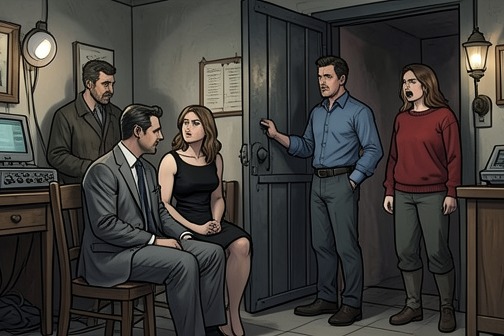
[Wade Larue’s release](entity:event-recall-event-wade-larue-0a24190e4ba4) on probation ends fifteen years of imprisonment but does not settle the past that put him there. At a public appearance in New York, he faces families whose grief has hardened into anger, among them [Grace Lawson](entity:character-recall-character-grace-lawson-a1a63aae00db) and [Carl Vespa](entity:character-recall-character-carl-vespa-93d298729f20). Larue considers himself beyond fear and entitled to move on; the people watching him have not moved on at all. His departure from prison is therefore both a literal return to freedom and a confrontation with the unequal meanings of that freedom.
## The release is announced
Before Larue appears in public, Carl Vespa tells [Grace](entity:character-recall-character-grace-f21f0fdf609d) that the release is being rushed and that Larue will be out the following day. He wants Grace to attend a press conference in New York, where Larue’s lawyer will speak and the families will be present. Vespa recalls his son Ryan playing baseball with cards on the carpet, laying out a whole field, before disclosing the news. The change in his expression as the memory gives way to Larue’s imminent release makes the announcement personal rather than procedural: the return of the man associated with the deaths reopens grief that had briefly surfaced as a happy recollection.
Larue sits beside [Sandra Koval](entity:character-recall-character-sandra-koval-0782a975a01b), his lawyer, in brand-new clothes. He is thirty-seven and entered prison at twenty-two, so almost all his adult life has been spent inside. The unfamiliar absence of prison’s smell is itself an adjustment. The narrative makes release tangible through this small sensory disruption: the world outside is not yet an uncomplicated promise but a place whose ordinary conditions feel strange after years of confinement.
## The families and Larue at the podium
The faces looking up at Larue are familiar from his trial fifteen years earlier. Then, he remembers, their grief and bewilderment were still raw; now those feelings have become anger and hate. He keeps his head up and meets their eyes, a marked change from his earlier avoidance. Larue believes he never meant to hurt anyone, remembers apologizing, and regards his imprisonment as a severe price already paid. In his view, the families’ continuing anger is a refusal to forgive. The narration does not equate his account with theirs: the intensity of his grievance sits against the years of loss that remain visible in the room.
Koval speaks about apology, forgiveness, transformation, and second chances. Larue tunes her out. The contrast matters: the language presented to the public describes a changed man, but the released prisoner shown in the scene is impatient with that performance and resentful of those who have not accepted its terms. He recalls that he once understood and sympathized with the families; now he feels that their lack of forgiveness has destroyed that sympathy. His release has not produced reconciliation. Instead, it places the opposing claims side by side: Larue insists on the cost he has borne, while the families’ presence testifies that his freedom cannot undo their losses.
Carl Vespa rises without warning, and Grace Lawson stands as well. Their joint movement throws Koval off balance and puzzles Larue, who does not understand why Grace and Vespa are together. He wonders whether he will soon meet Grace, but cannot tell whether the moment changes anything. The scene offers no confrontation between them before he leaves. Their standing is significant precisely because it interrupts the composed public occasion without resolving what Larue’s release means to them.
## Fifteen years inside, and the account of survival
Larue’s response to the families is shaped by his own history in prison. When he first arrived, Vespa’s associates beat him; people seeking favor followed, and even guards joined in. Fear became as habitual as the prison’s smell. By the time he sees Vespa in person at the release appearance, Larue believes he has passed beyond that fear. The detail complicates the public image of a released felon: he carries the effects of prison with him, though he interprets that endurance not as a reason to reckon with his victims but as evidence that he has survived his punishment.
He has made friends inside, but rejects the claim, voiced by Koval to the audience, that prison builds character. In Larue’s understanding, prison strips people down and makes survival ugly. He tells himself that this, too, is past. The thought that he is out now is immediately qualified by the families’ presence and by the sense that the event is not quite over. His insistence on moving forward meets a scene that keeps the past physically in the room.
## Leaving prison, not leaving the past
When Koval finishes, she leans over and tells Larue he can use the back way out. Ten minutes later, he is on the streets of Manhattan, free for the first time in fifteen years. The route out is discreet, but the release itself has been public: the families have seen him, and he has seen them. The change of setting cannot erase that encounter.
Larue looks up at the skyscrapers and chooses Times Square as his first destination. He wants noise, crowds, and contact with people who are not prisoners; green grass and trees hold no appeal, since he could see them from his cell at [Walden Prison](entity:location-recall-location-walden-prison-a15806c101ae). His imagined first day outside is defined less by quiet recovery than by a hunger for ordinary human company. Yet the scene ends with him checking his watch and noticing that it is almost time. The destination is clear, but what he is timing is not explained. That unresolved beat keeps the release from reading as a settled new beginning: Larue has crossed the prison boundary, while the story leaves his next movement—and the consequences of his return to public life—open.
Event 8
Eric Wu abducts the Lawsons and Grace escapes
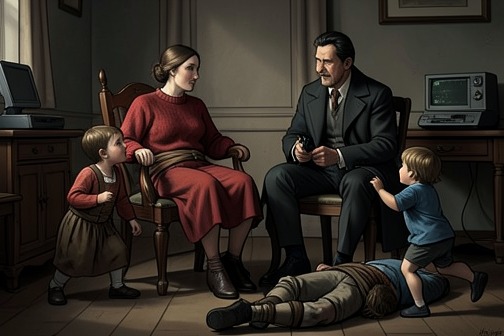
[Eric Wu](entity:character-recall-character-eric-wu-b89e49cec260)’s abduction of the Lawsons turns [Grace Lawson](entity:character-recall-character-grace-lawson-a1a63aae00db)’s search for answers into a forced choice between her own safety and the lives of her children. The encounter also reverses the apparent helplessness of [Jack Lawson’s captivity](entity:state-recall-state-jack-lawson-s-captivity-5af0205bea26): even bound and gravely weakened, he creates the opening that allows [Grace](entity:character-recall-character-grace-f21f0fdf609d) to fight back.
## Abduction and Coercion
Grace had just ended a call about going to the station, hoping [Captain Stuart Perlmutter](entity:character-recall-character-captain-stuart-perl-7c1d9330222b) might now believe what she had learned about the photograph. At that moment, Wu touched her shoulder and whispered that he had her husband. The promise of seeing [Jack](entity:character-recall-character-jack-b5a26722c3ea) drew Grace into a trap, but Wu quickly made clear that her children were his leverage. With the school bell due to ring in a minute, he threatened to shoot them—and random children—unless she came quietly. Grace could not speak. The threat made the abduction more than a private confrontation: Wu placed a group of children in immediate danger to control her next move.
## The Hidden Weapon and Jack’s Reappearance
When the abduction moved into the car, Grace Lawson was frightened but also possessed by an unusual calm: she believed the encounter might lead to answers. Eric Wu sat beside her and directed her along the road, unaware—or at least not yet acting on the fact—that she had a gun in her ankle holster. The weapon gave Grace a possible means of resistance, but not an easy one; her attention had to remain on Wu’s movements and on the danger he posed.
Grace managed to bring her arms around in front of her, but Eric Wu returned before she could turn that small gain into an escape. He stood only a few feet away and saw what she had done. Grace, however, was staring at his right hand. Wu let go, and [Jack Lawson](entity:character-recall-character-jack-lawson-ffd2637b5d2d) fell to the floor beside him. The sudden sight of Jack changed the immediate stakes: the missing husband Grace had been promised she would see was there, but still in the hands of the man controlling them.
## Jack’s Resistance and Grace’s Escape
As Grace reached for the gun in her ankle holster, Eric Wu seized her knee and squeezed until pain nearly knocked her unconscious. Her hands fell uselessly away from the weapon. Then Jack Lawson rose from the back seat, though his hands and legs were bound and he appeared spent. He drove his forehead into Wu’s cheek, surprising him enough to make the car stop and release Grace’s knee. Jack’s shouted command, “Run, Grace!” gave her a moment to reach for the gun.
Wu recovered quickly, grabbing Jack by the neck and reaching again for Grace’s knee. Jack’s head sagged against Wu’s shoulder, seemingly lifeless, but he opened his mouth and bit down hard on Wu’s arm. Wu howled and shook him, then struck his head with his free hand until Jack slumped away. The resistance did not free Jack; it bought Grace another chance. She pulled the door handle and leaned against it, while Wu got out and reached for his own gun.
The choice that had begun as a struggle for access to her holstered weapon became immediate self-defense. Grace saw Wu reaching for his gun and pulled the trigger repeatedly. He staggered as sirens approached, but she fired again. The confrontation ended with both Lawsons needing emergency care: two ambulances arrived, and Jack was taken away before Grace could see him. Paramedics worked on her as she was strapped to a stretcher and wheeled toward an ambulance; Captain Stuart Perlmutter was there.
## Consequences and Narrative Significance
The gunfire marks a decisive change in the balance of power, but not a clean escape from danger. Until Eric Wu reaches for his own weapon, Grace’s opportunity to act is repeatedly cut off by his control of her body and by Jack Lawson’s inability to overpower him. When that threat becomes immediate, the narration presents Grace’s response as stripped of deliberation: she does not pause to warn Wu or ask him to surrender. She fires, and keeps firing as he staggers and the sirens draw nearer. The scene’s moral pressure lies in that narrowing of choice: survival becomes an action taken under immediate threat, not a decision Grace can safely postpone.
The rescue remains physically and emotionally unresolved in its first moments. Two ambulances arrive, and Jack is carried away before Grace can see him; the man she has fought to reach is again removed from her sight, this time by emergency responders rather than her captor. Paramedics work on Grace and ask questions, but their words do not register. Strapped to a stretcher and wheeled toward an ambulance, she is present but unable to take in the scene around her. Captain Stuart Perlmutter is there, connecting the confrontation back to the investigation Grace had meant to bring to him, while the immediate aftermath shifts from pursuit of answers to urgent medical care.
The event’s central reversal is therefore partial but consequential. Jack’s bound, apparently spent body becomes an instrument of resistance, buying Grace the opening to reach her gun; Grace’s use of it ends Wu’s control over them, while leaving the Lawsons’ condition and reunion in the hands of the emergency response. The sequence turns the promise that Grace would see her husband into a brutal encounter, then makes that encounter the means by which she can act against her captor. Its ending offers neither an easy reunion nor a settled aftermath: it closes on sirens, separate ambulances, and Grace being carried away before she can know what has happened to Jack.
Event 9
Wade Larue is assassinated
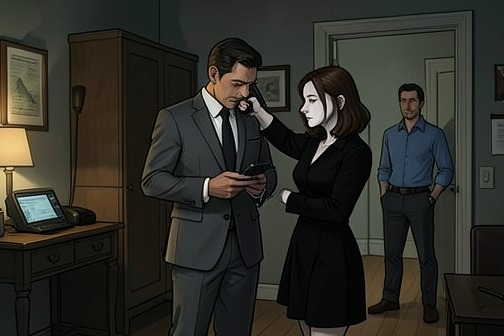
[Wade Larue is assassinated](entity:event-recall-event-wade-larue-fa93391f8ae4) after his release, just as he appears to have made peace with the past. His death turns a moment of tentative freedom into a final return to the unresolved truth he had hoped to leave behind.
## Release and the Last Phone Call
Wade briefly imagines starting over: he could change his name, grow a beard, dye his hair, and try acting again, or take an ordinary job in a big city. He believes he can be free. Yet he does not go to the Port Authority bus station. A block away, he watches the buses head toward the viaduct, then turns to the pay phones. The past still holds him; he decides he needs one last phone call and one last truth.
That decision follows a genuine change in his understanding of vengeance. A few minutes before his death, Wade believes he has found peace: he has let vengeance go and accepts that he knows enough to distinguish where he was responsible from where he was not. But his resolve to stop pursuing the full truth does not survive the pull of the past. The call marks the fragile boundary between wanting to move on and needing to know more. An hour later, a gun is pressed beneath his ear. His last thought recalls [Eric Wu](entity:character-recall-character-eric-wu-b89e49cec260) explaining that the hollow was a pressure point, but knowing its location alone would not incapacitate an opponent. The thought ends with the bullet that kills him.
## The Killing and Its Aftermath
The final account places Wade’s death less than twenty-four hours after his release. A reporter from the New York Daily News followed him after he left a press conference at the Crowne Plaza and saw him get into a black sedan with a man who fit [Cram](entity:character-recall-character-cram-7f1ba676c855)’s description. It was the last confirmed sighting of Wade alive. His body was later found near the Port Authority Bus Terminal in [New York City](entity:location-recall-location-new-york-city-65df0a129d4c), shot in the head at point-blank range. The timing and location connect the killing to the brief interval in which Wade had tried to leave his past behind, then turned back toward one last unanswered truth.
No one had been arrested by the time the account closes. The sedan sighting is presented as the sole significant clue, not as proof of the gunman’s identity; the narrative says the answer nevertheless seemed clear. That gap between what can be established and what can be inferred echoes Wade’s own late conviction that he knew enough without knowing everything. His attempt to stop pursuing the past ends not in freedom but in a death whose circumstances point toward an explanation while leaving the case formally unresolved.
## The Cost of an Incomplete Ending
The later reckoning places Wade’s killing among deaths that have narrowed the possibility of a complete explanation. [Jimmy X](entity:character-recall-character-jimmy-x-93737acc033e), whose real name was James Xavier Farmington, died from three gunshot wounds to the chest; by the time the account closes, too many of the people involved are dead for every question to be answered. Wade’s murder is therefore not simply a concealed crime awaiting a neat solution. It belongs to a history in which evidence survives unevenly, witnesses disappear, and certainty remains out of reach.
That uncertainty has a human measure in [Carl Vespa](entity:character-recall-character-carl-vespa-93d298729f20). Fifteen years after his son Ryan died, time has not made the loss bearable or altered its fact. Wade had begun to relinquish vengeance, but Carl’s grief shows that such a change in one person cannot repair what remains for another. The ending sets Wade’s brief inward release against the persistence of bereavement: the truth may be incomplete, and the past may remain active, even when the pursuit of revenge has stopped.
## The Death as a Limit of Knowledge
The account draws a sharp boundary between what can be known about Wade’s final hours and what remains inaccessible. His last thought is rendered from within his own consciousness, but the killing itself is not witnessed; afterward, a reporter’s observation and the condition of his body establish a trail without supplying a complete explanation. This shift from intimate thought to external evidence makes the gap consequential: Wade dies while pursuing one last truth, yet the surviving facts do not grant the reader certainty about every part of his death. The event thus closes his personal attempt to settle the past while preserving the larger story’s distinction between a persuasive answer and a fully proven one.
Event 10
The death of Jack Lawson
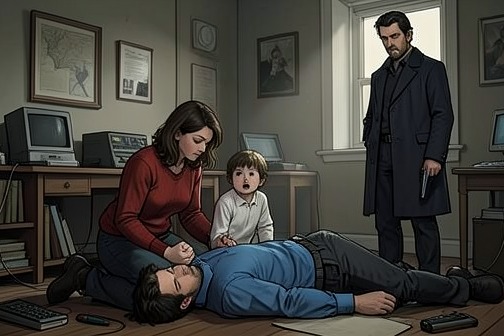
[The death of Jack Lawson](entity:event-recall-event-jack-lawson-20a90ec791cf) is the final loss in the crisis surrounding his disappearance and captivity. The account moves from the abrupt sight of [Jack](entity:character-recall-character-jack-b5a26722c3ea) falling at [Grace Lawson](entity:character-recall-character-grace-lawson-a1a63aae00db)’s side to surgery, coma, and a last bedside decision: whether their children should be with him as he dies. His death ends the possibility of asking him about the lies and uncertainties that have shaped their marriage, while leaving Grace Lawson to carry both those unanswered questions and a more intimate memory of him.
## The Fall and Its Immediate Aftermath
Grace Lawson has forced her arms through and brought them in front of her when the man returns to the room. She does not look at his face; her attention fixes on his right hand. He lets go, and [Jack Lawson](entity:character-recall-character-jack-lawson-ffd2637b5d2d) falls to the floor beside him. The suddenness of the moment matters: Jack’s return to Grace Lawson is not a reunion she can prepare for or understand, but a sight framed first by the release of his body. The narrative gives no explanation here of what has happened to Jack or what caused his condition. It presents the fall as the point at which Grace Lawson’s immediate struggle becomes a desperate attempt to reach him.
Grace Lawson dives toward Jack Lawson and calls his name. Later, when she asks where [Emma Lawson](entity:character-recall-character-emma-lawson-7a7ba141e45b) and [Max Lawson](entity:character-recall-character-max-lawson-36290a1763a8) are, she is told that they are at the station and safe. The news establishes a boundary around the danger: the children are out of immediate reach of the crisis, but Jack Lawson remains in grave condition. An hour later, he is in surgery, and that is all the information available to Grace Lawson. The repeated limitation of what she is told makes the hospital a place of waiting rather than explanation; the immediate question is whether Jack Lawson will live.
## Surgery, Coma, and Uncertainty
While Jack Lawson is in surgery, doctors examine Grace Lawson as well. Her ribs are cracked, and an Ace bandage is wrapped around them; an injection eases her pain. An orthopedic surgeon examines her knee and offers no reassuring response. These injuries place Grace Lawson’s own body in the aftermath of the crisis, but they do not displace her concern for Jack Lawson. His treatment remains uncertain, and the account gives no medical explanation for the outcome.
[Captain Stuart Perlmutter](entity:character-recall-character-captain-stuart-perl-7c1d9330222b) questions Grace Lawson in her hospital room. She answers most of his questions but remains deliberately vague on some subjects. Her hesitation is not presented as a simple wish to obstruct the police: she tells herself that she does not want to keep anything from them, then allows that perhaps she does. This unresolved instinct to withhold accompanies the larger uncertainty around Jack Lawson. The crisis has made information urgent, yet neither the police questions nor the medical updates can provide the explanation she most wants.
Later, Grace Lawson tells [Charlaine Swain](entity:character-recall-character-charlaine-swain-8c667e36f1ed) that Jack Lawson is in a coma and says she is going to see him. Charlaine Swain does not offer a hollow reassurance; the exchange rests on the honesty that both women have moved beyond platitudes. The change from surgery to coma marks a grim interval in Jack Lawson’s condition, but the narrative does not specify how much time has passed or describe a medical prognosis. It allows the blunt fact of the coma to carry the weight of what Grace Lawson cannot yet know.
## The Last Decision
At Jack Lawson’s bedside, Dr. Stan Walker sits beside him and speaks in a grave voice. Emma Lawson and Max Lawson wait in the corridor because they want to be there, while Grace Lawson struggles to decide what to do. The choice is not whether to disclose Jack Lawson’s history or demand an account of it; it is whether the children should be brought to their father before he dies. Grace Lawson wishes she could ask Jack Lawson what he wants, but he cannot answer.
Grace Lawson knows there are questions about their life together that she could put to him. She does not want to ask why he lied for so long, what he did on the terrible night, or whether he had deliberately sought her out when they met on the beach. She does not seek an explanation for how their love began or what it concealed. At this bedside, those questions yield to one immediate concern: whether Jack Lawson wants his children beside him. The passage makes the distinction consequential. The past remains unresolved, but Grace Lawson can still make a choice for the family in the present.
In the end, Grace Lawson lets Emma Lawson and Max Lawson stay. The four gather as a family for the last time. Emma Lawson cries; Max Lawson keeps his eyes on the tile floor. Grace Lawson feels Jack Lawson leave for good, a quiet description that renders his death through her perception rather than a medical account. The scene gives the family a final shared presence without suggesting that it repairs what has been hidden or makes the loss easier to bear.
## Death and the Memory That Remains
The funeral is blurred for Grace Lawson. She usually wears contact lenses, but takes them off that day and does not wear her glasses; the softened view makes the occasion easier to handle. What remains sharply available to her is not the beach or the vineyards, but Jack Lawson holding Emma Lawson just after her birth. She remembers his large hands supporting the newborn as though she might break, his fear that he might hurt her, and the look of awe he turned toward Grace Lawson.
That memory gives the ending its counterweight. The final hospital scene records Jack Lawson’s departure, while the funeral returns Grace Lawson to an image of him at the beginning of fatherhood: careful, awed, and holding their child. The remembered gesture does not answer the questions she chose not to ask, and it does not erase his lies. Instead, it remains beside them as a specific image of the husband and father she knew. His death closes the chance for further answers; the image she carries forward is one of tenderness witnessed at the start of their family life.
Event 11
John Lawson’s death and Shane Alworth’s identity substitution
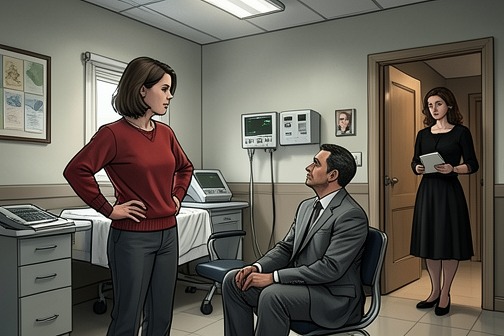
[John Lawson’s death and Shane Alworth’s identity substitution](entity:event-recall-event-john-lawson-shane-alwor-df91bf974ea4) is the history [Grace Lawson](entity:character-recall-character-grace-lawson-a1a63aae00db) pieces together when she confronts [Sandra Koval](entity:character-recall-character-sandra-koval-0782a975a01b) about the identity of her husband, [Jack Lawson](entity:character-recall-character-jack-lawson-ffd2637b5d2d). [Grace](entity:character-recall-character-grace-f21f0fdf609d)’s case joins a reported shooting, the absence of a scar, and the voting rules of the Lawson family trust into a possible explanation for how Shane came to live as John. The confrontation makes the substitution seem increasingly plausible, but its crucial details remain Grace’s reconstruction: Sandra does not confess, and she challenges whether the arrangement amounted to a crime.
## The shooting and the missing scar
The immediate basis for Grace’s account is that [Jimmy X](entity:character-recall-character-jimmy-x-93737acc033e) and [Gordon MacKenzie](entity:character-recall-character-gordon-mackenzie-c299d7f6c5ac) both said John Lawson was shot on the night of the concert. Sandra confirms that her brother was shot and says he spent three weeks in a hospital, naming Mass General when Grace asks where. The exchange initially appears to settle a fact about John’s fate. Instead, Grace uses it to test whether the man she married could have been him.
Grace says she did not need to check every hospital in the [Boston](entity:location-recall-location-ccccb9ca0ba9) area because [Jack](entity:character-recall-character-jack-b5a26722c3ea) had no scar. In her reasoning, a bullet wound would have left one; the absence of that mark therefore contradicts the claim that her husband was the wounded John. She presents the discrepancy as simple logic, but her hands are trembling as she lays out what it means: she had not been married to Sandra’s brother. The bodily evidence is small and specific, yet it overturns the identity on which years of family life had rested.
Grace’s alternative is that John’s wounds were lethal. She says Sandra and [Sheila Lambert](entity:character-recall-character-sheila-lambert-fc8535edc6b4) helped drag him out during the melee, then argues that taking him to a hospital would have required reporting the shooting. A dead body—or even a body abandoned in the street—could also have drawn an investigation connecting the violence to the concert. Grace frames Sandra’s supposed fear as both personal and public: she was a promising lawyer, while the Boston district attorney, [Carl Vespa](entity:character-recall-character-carl-vespa-93d298729f20), and the families were demanding accountability. This is Grace’s explanation of why the shooting might have been concealed, not a confirmed account of what Sandra did afterward.
## The proposed identity substitution
Grace identifies her own husband as Jack Lawson, formerly known as [Shane Alworth](entity:character-recall-character-shane-alworth-d32bb93eaa1d). In her reconstruction, [Eric Wu](entity:character-recall-character-eric-wu-b89e49cec260) had not held two men in the basement but one: Jack, who had sacrificed himself to save Grace and may have wanted to leave a final truth behind. That realization connects the immediate danger of Jack’s captivity to the older concealed history. Grace treats the identity as the answer to the contradiction between Sandra’s account of John’s hospital stay and her husband’s unmarked body.
The practical means of the substitution, as Grace describes them, depended on cooperation and paperwork. She suggests that Sandra and her father could have helped Shane obtain identification using John’s birth certificate and other documents, perhaps explaining away a new face by claiming John’s wallet had been stolen. Grace notes that screening was easier at the time and that John had already graduated from [Vermont University](entity:location-recall-location-vermont-university-a2a1718fc000), so Shane would not have needed to appear there as the same person. She also points to a change from a Los Angeles trust lawyer to a new lawyer in Boston who would not know John’s appearance. In this account, the family’s presence and apparently proper identification could make the impersonation pass without inviting questions.
Grace further proposes that Shane could travel overseas and, if challenged, use Jack or explain that he was another John Lawson. The commonness of the name would, in her theory, offer another layer of cover. These details describe how Grace believes the substitution could have worked; they do not establish that each step occurred. She says old photographs and a DNA test could prove that her husband was not Sandra’s brother, and insists that the case could be demonstrated even if Sandra remained silent.
## The trust and the possible motive
The family trust gives Grace’s theory a financial and political dimension. She says she found trust papers in Jack’s desk and took them to a lawyer friend. According to her account of the documents, the grandfather established six trusts for his two children and four grandchildren. The voting shares were divided among the six, with the father receiving an additional four percent; together, Sandra’s side of the family retained control of the business by fifty-two percent to forty-eight.
The terms Grace describes also provided for a redistribution if one of the beneficiaries died before age twenty-five: the voting power would be divided equally among the five survivors. If John had died on the concert night while still within that age limit, Grace reasons, Sandra and her father would lose their majority position. She does not claim certainty about Sandra’s motive. Rather, she offers fear of exposure and fear of losing control of the business as possible pressures that might have converged. The trust clause turns the concealment from an effort to avoid investigation into a possible means of preserving family control.
Grace imagines that Shane’s own circumstances could have made him vulnerable to recruitment. She cites his mother’s account that the family was very poor, his brother Paul could not afford college, and his mother lived in a dilapidated home. Grace speculates that Sandra may have threatened consequences for the members of [Allaw](entity:organization-recall-organization-allaw-81c9b74c9e54) if one of them was implicated. The conversation does not verify a threat or establish how Shane agreed to assume John’s identity; it exposes the distance between the resources Grace believes the Lawson family possessed and the limited choices she suspects Shane faced.
## What the confrontation leaves unresolved
Sandra does not confirm Grace’s account. She asks whether Grace expects her to break down and confess, then says she is not sure she sees a crime in what Grace has described. Her response neither supplies the missing sequence nor resolves whether John died from his wounds, what happened to his body, or exactly how Shane became Jack. Grace, for her part, acknowledges that her explanation may be wrong, while maintaining that photographs and DNA could establish the identity difference.
The event therefore reaches a decisive shift in what Grace believes without producing a complete public confession. Jack’s name, which had seemed to identify her husband and connect him to Sandra’s family, becomes evidence of an assumed identity; the absent scar and the trust papers become clues in the same reconstruction. Yet the distinction between a persuasive theory and an admitted fact remains essential. The confrontation brings John’s reported shooting, Shane’s possible substitution, and the family’s voting interests into one causal account, while leaving Sandra’s responsibility and the precise circumstances of John’s death contested.
Event 12
The Jimmy X concert backstage incident
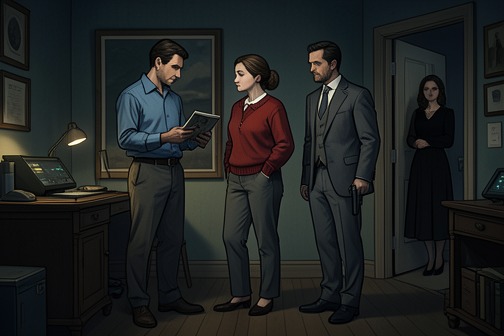
[The Jimmy X concert backstage incident](entity:event-recall-event-jimmy-x-1ac67d7fd575) is a pivotal but incompletely reconstructed episode in the history surrounding [Grace Lawson](entity:character-recall-character-grace-lawson-a1a63aae00db), [Jimmy X](entity:character-recall-character-jimmy-x-93737acc033e), and the [Boston Garden](entity:location-recall-location-boston-garden-8a6c91071b47) disaster. Its known outline includes John Lawson confronting Jimmy X over alleged song theft and [Gordon MacKenzie](entity:character-recall-character-gordon-mackenzie-c299d7f6c5ac) firing the first shot; its later significance lies in [Scott Duncan](entity:character-recall-character-scott-duncan-487250ab727b)’s uncertain suggestion that [Grace](entity:character-recall-character-grace-f21f0fdf609d) herself may have been nearby, a possibility that unsettles what she remembers about meeting [Jack Lawson](entity:character-recall-character-jack-lawson-ffd2637b5d2d).
## Background and contested chronology
The incident belongs to a musical history that Grace had not consciously connected to her life with [Jack](entity:character-recall-character-jack-b5a26722c3ea). The possibility of that connection emerges years later, when Scott tells her that [Todd Woodcroft](entity:character-recall-character-todd-woodcroft-91fc6d301bab) had not attended the concert: Grace had ended her relationship with Todd two days before the show. Scott then links that timing to his own family history. [Shane Alworth](entity:character-recall-character-shane-alworth-d32bb93eaa1d) had ended his relationship with Scott’s sister, [Geri](entity:character-recall-character-c40c827ee3c5), on the same day, and Geri never went to the concert. Scott’s question about whom Shane took instead opens a gap in the established account rather than resolving it.
The chronology matters because the photograph Scott produces was not taken at the concert. It is the original Polaroid, enlarged from the image he had arranged to place in Grace’s film envelope, and Scott’s sister had written the date on its back: it was taken the day before the show. The photograph therefore supplies a clue to the people and relationships around the concert, not a direct record of the backstage confrontation. Its date both sharpens the inquiry and limits what it can prove.
## The backstage confrontation
The incident’s central conflict involved John Lawson confronting Jimmy X over song theft. Gordon MacKenzie fired the first shot, and Jimmy X and Gordon later shared in concealing the truth about the shooting. These facts make the backstage episode more than a dispute over music: it became a moment of violence whose account was obscured by the people connected to it. The available reconstruction does not settle every movement or motive, and the later clues should not be mistaken for a complete eyewitness account.
Scott’s account turns on a possible link between the photograph’s unidentified woman and the backstage sequence. He suggests that the woman, whom Grace had thought might be [Sandra Koval](entity:character-recall-character-sandra-koval-0782a975a01b), could instead have been Grace. He also asks whether a pretty girl distracted Gordon MacKenzie while the others got to Jimmy X, ruling out Geri, [Sheila Lambert](entity:character-recall-character-sheila-lambert-fc8535edc6b4), and Sandra as the woman in that role. The claim remains explicitly speculative. Scott offers it as a possibility, not as proof that Grace was present or that she deliberately helped anyone reach Jimmy X.
## The photograph and Grace’s possible presence
The photograph changes the question from who was at the concert to who may have been with Shane before it. Scott uses its date, together with the breakups, to suggest that Shane may have taken someone other than Geri. The barely visible woman at the edge of the image becomes the hinge of that reconstruction. Because Grace had assumed the figure was Sandra, Scott’s proposal makes the photograph newly personal while leaving its identification unresolved.
Grace rejects the suggestion, insisting that she would have remembered such an encounter. Yet Scott offers several explanations rather than a single conclusion: the woman might have talked Shane out of going backstage, or Shane might have recognized something more important in the front pit than anything he could find in a song. He even suggests that Shane may have made sure, three years later, to find that important thing again. The language keeps the account open. The event is not recovered as a settled memory; it is reconstructed through a photograph, timing, and a pattern that Grace cannot immediately explain.
## Memory, public tragedy, and aftermath
Grace’s response is tied to a past she has understood through the public story of the [Boston](entity:location-recall-location-ccccb9ca0ba9) Massacre. After she was pulled from the disaster, television crews monitored her vital signs, the press followed her condition, and tabloids made her the innocent survivor they called the Crushed Angel. Her image drew the attention of families who searched her face for traces of their own lost children. Years later, she resisted anniversary coverage, believing attention belonged to the dead and their families rather than to her own survival. That public identity had made her visible, but it had not made her past fully legible to herself.
The anniversary gathering shows how that history remains present. When Grace enters a press conference hosted by [Burton and Crimstein](entity:organization-recall-organization-burton-and-crims-995a7c8ef92b), she encounters the Garrisons, the Reeds, and the Weiders, whose grief has aged without easing. They approach silently and embrace her; she recognizes again the sadness she had encountered in the hospital. She also hugs the widow of Gordon MacKenzie, who had been credited with opening emergency exits and pulling people to safety, though he himself described his actions as instinctive and said he could not remember them clearly. The silent embraces and the uncertain recollections echo the backstage mystery: both the public disaster and the private incident survive through partial memories, other people’s accounts, and the consequences carried forward.
## Significance and unresolved meaning
Scott’s reconstruction does not establish that Grace attended the concert or distracted Gordon. Its force comes from how it makes those possibilities touch her present. At the beach, Grace remembers the first time she saw Jack and the immediate bodily sense that she had encountered him before. Scott’s suggestion gives that feeling a possible history, but not a definitive explanation. The novel thus makes the past return as a question rather than a recovered scene: a dated photograph and a chain of coinciding breakups can unsettle identity without restoring certainty.
The incident also marks the difference between public remembrance and private knowledge. Grace had spent years refusing to turn survival into a public performance, while the old photograph and Scott’s account reveal how much of her own history may have remained outside conscious memory. When Scott leaves her with the cassette and his conjectures, she returns to painting after Jack’s death. Her effort to paint Jack succeeds not as an image of John Lawson or Shane Alworth, but as Jack. The incident’s lasting consequence is therefore not a final solution to the backstage shooting; it is the recognition that the people Grace loved, and her own past, may contain connections she cannot completely know.